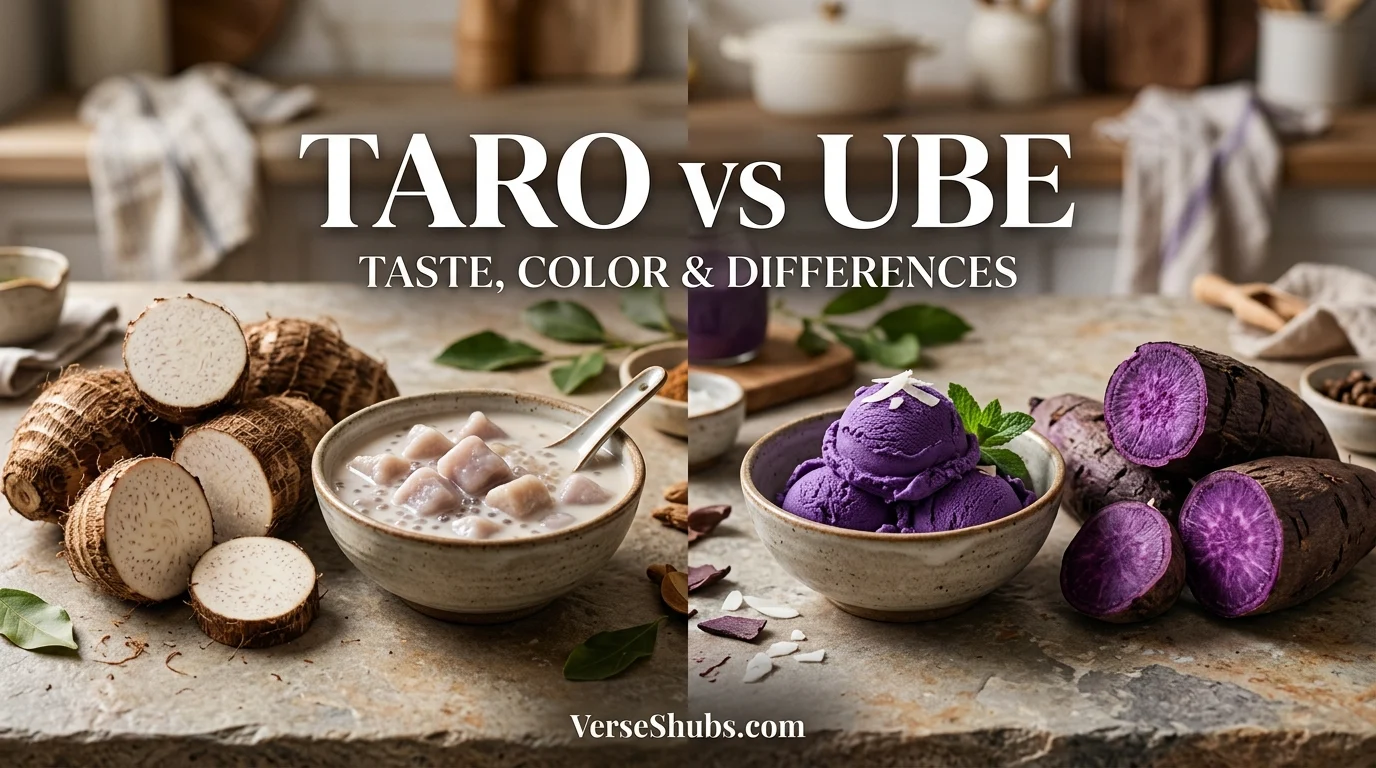
Taro vs ube is a common comparison among people who enjoy bubble tea, ice cream, cakes, and Asian desserts. Although these two ingredients may look similar in certain foods, they come from different plants and have distinct flavors.
Taro is a starchy corm with a mild, earthy taste, while ube is a purple yam known for its naturally vivid color and sweeter, nutty flavor.
Both ingredients are popular in sweet dishes and drinks, but they are used differently across various cuisines. Taro is widely used in savory meals, soups, chips, and milk tea, while ube is especially popular in Filipino desserts such as ube halaya, cakes, and pastries.
Understanding their differences can help you choose the right ingredient for your recipe, recognize their flavors on a menu, and decide which one best suits your taste.
Quick Answer: What Is the Difference Between Taro and Ube?
Taro is a tropical corm with pale flesh, a starchy texture, and a mild, earthy flavor. Ube is a purple yam with naturally purple flesh and a generally sweeter, nutty taste. Both are used in desserts and drinks, but taro is more versatile in savory cooking, while ube is especially popular in Filipino sweets.
Why Do People Confuse Taro and Ube?
People often confuse taro and ube because both ingredients appear in colorful desserts, creamy drinks, and ice cream. Some commercial products also use purple food coloring or flavoring, making the two ingredients look almost identical.
Here are the main reasons for the confusion:
- Both grow underground and store energy in edible plant structures.
- Both can have earthy and nutty flavor notes.
- Both are used in milk-based drinks and desserts.
- Both can produce creamy textures when cooked and mashed.
- Their appearance can change during cooking or processing.
- Sweeteners and flavorings can make their tastes more similar.
Despite these similarities, taro and ube are botanically different and have their own culinary characteristics.
What Is Taro?
Taro is a tropical plant known scientifically as Colocasia esculenta. Its edible underground corm is often called a root in everyday conversation, although botanically it is a swollen stem rather than a true root.
Taro is widely used in Asian, African, Caribbean, and Pacific Island cuisines. Depending on the region, it can be prepared as a savory side dish, added to soups, or turned into a sweet dessert.
What Does Taro Taste Like?
Taro has a mild, earthy, starchy flavor. Many people describe it as slightly nutty, with a taste that can resemble a potato combined with subtle chestnut-like notes.
Unlike many dessert ingredients, plain taro is not particularly sweet. Its flavor becomes sweeter when combined with sugar, condensed milk, or flavored syrups.
What Color Is Taro?
Taro flesh is usually white or cream-colored, sometimes with purple or pink specks. Some varieties have more noticeable purple coloring.
When cooked or processed into desserts, taro may appear pale lavender, grayish-purple, or cream-colored, depending on the variety and other ingredients.
What Are the Common Uses of Taro?
Taro can be used in both savory and sweet recipes.
- Taro milk tea
- Taro bubble tea
- Taro ice cream
- Steamed taro
- Taro chips
- Taro cakes
- Taro soup
- Mashed taro
- Taro dumplings
- Taro pudding
Important: Raw taro contains irritating calcium oxalate crystals. It must be properly cooked before eating.
What Is Ube?
Ube is a purple yam known scientifically as Dioscorea alata. It is particularly associated with Filipino cuisine, where it is used in traditional sweets, baked goods, and festive desserts.
Ube is valued for its naturally purple flesh, distinctive flavor, and ability to give desserts an attractive color.
What Does Ube Taste Like?
Ube generally has a sweet, earthy, and nutty flavor. Some people describe it as having vanilla-like or pistachio-like notes, although its exact taste varies according to the variety and preparation method.
Ube’s sweetness is particularly noticeable in desserts made with sugar, milk, butter, or coconut milk.
What Color Is Ube?
Ube usually has purple flesh ranging from light lavender to deep violet. Its natural color makes it especially popular in cakes, ice cream, cookies, and other visually appealing desserts.
However, the final color depends on the yam variety and how it is processed. Some commercial ube products also contain additional coloring.
What Are the Common Uses of Ube?
Ube is most commonly associated with sweet dishes.
- Ube halaya
- Ube ice cream
- Ube cake
- Ube cheesecake
- Ube cookies
- Ube pandesal
- Ube pastries
- Ube pancakes
- Ube milk
- Ube-flavored lattes
Ube is often combined with dairy products, coconut milk, sugar, or butter to create rich and creamy desserts.
Taro vs Ube: Comparison Table
| Feature | Taro | Ube |
|---|---|---|
| Botanical name | Colocasia esculenta | Dioscorea alata |
| Plant classification | Corm | Yam |
| Natural flesh color | White or cream, sometimes purple-speckled | Lavender to deep purple |
| Main flavor | Mild, earthy, starchy | Sweet, earthy, nutty |
| Sweetness | Generally mild | Generally sweeter |
| Texture when cooked | Soft, creamy, or fluffy | Soft, smooth, or dense |
| Popular drink | Taro milk tea | Ube latte |
| Popular dessert | Taro ice cream | Ube halaya |
| Savory cooking | Very common | Less common in traditional Filipino preparations |
| Cultural association | Many Asian, African, Caribbean, and Pacific cuisines | Particularly associated with Filipino cuisine |
| Appearance in desserts | Often pale or lavender | Usually more vividly purple |
| Best-known quality | Versatility | Distinctive color and sweet flavor |
When Should You Use Taro or Ube?
The best choice depends on your recipe, preferred flavor, and desired appearance.
Choose Taro When You Want
- A mild, earthy flavor that works in different recipes.
- A starchy ingredient for soups, stews, and side dishes.
- A subtle taste in milk tea or smoothies.
- A creamy texture without excessive sweetness.
- A traditional taro-based dish or dessert.
Choose Ube When You Want
- A naturally purple ingredient for desserts.
- A sweeter, nutty flavor.
- A traditional Filipino sweet such as ube halaya.
- A colorful cake, cookie, or pastry.
- A flavor that pairs well with vanilla, coconut, and dairy.
For example, taro is a suitable choice for a savory soup, while ube is often the better choice for a sweet purple yam cake.
12 Examples of Taro and Ube in Food
These examples demonstrate how each ingredient is used in everyday cooking and desserts.
- Taro milk tea: A creamy beverage with a mild, earthy flavor.
- Ube latte: A milk-based drink featuring the sweet, nutty flavor of ube.
- Taro ice cream: A smooth dessert with a subtle starchy taste.
- Ube ice cream: A purple dessert with a distinctive yam flavor.
- Steamed taro: A cooked side dish with a soft, starchy texture.
- Ube halaya: A thick Filipino purple yam jam made with sweet ingredients.
- Taro chips: Thin slices of taro prepared as a crunchy snack.
- Ube cookies: Sweet baked treats with a purple color and nutty flavor.
- Taro cake: A cake made with taro paste or other taro preparations.
- Ube cheesecake: A creamy dessert flavored with purple yam.
- Taro soup: A savory dish in which taro adds body and creaminess.
- Ube pandesal: Filipino bread rolls made with ube, sometimes containing a cheese filling.
Although taro and ube can appear in similar foods, their different flavors and natural colors can change the final result.
Common Mistakes When Comparing Taro and Ube
Understanding a few common misconceptions can help you distinguish these ingredients more accurately.
- Thinking taro and ube are the same plant: They come from different botanical groups.
- Assuming all taro is purple: Taro flesh is commonly white or cream-colored, sometimes with purple specks.
- Assuming every purple dessert contains ube: Food coloring, syrups, or other purple ingredients can produce a similar appearance.
- Expecting taro to taste as sweet as ube: Taro is generally milder and starchier.
- Confusing ube with purple sweet potato: They are different plants with different characteristics.
- Eating taro raw: Raw taro can cause irritation and must be properly cooked.
- Substituting one without adjusting a recipe: Differences in moisture, sweetness, and color can affect the final dish.
Memory Trick: How to Remember Taro vs Ube
Use this simple memory trick:
Taro = mild and versatile. Ube = purple and sweet.
Taro is known for its starchy texture and mild flavor, making it useful in sweet and savory dishes. Ube is known for its purple flesh and sweeter, nutty flavor, making it especially popular in desserts.
This is a general guide rather than an absolute rule because varieties, cooking methods, and added ingredients can change the final flavor.
American vs British English: Taro and Ube
The words taro and ube are generally spelled the same in American and British English. The main differences involve food terminology and how familiar each ingredient is to local consumers.
| Term | Meaning |
|---|---|
| Taro | A tropical edible corm used in many cuisines |
| Ube | A purple yam commonly used in Filipino cooking |
| Yam | An edible underground storage organ from plants in the genus Dioscorea |
| Corm | A swollen underground plant stem that stores nutrients |
| Purple sweet potato | A purple-fleshed variety of sweet potato, different from ube |
Both ingredients can be found in specialist grocery stores and Asian supermarkets in the United States and United Kingdom, although availability varies by location.
Similar Ingredients: Taro vs Ube vs Purple Sweet Potato
Purple sweet potato is another ingredient that people sometimes confuse with taro and ube. All three can be used in colorful recipes, but they are not interchangeable in every dish.
Taro vs Purple Sweet Potato
Taro is a corm with a mild, earthy flavor and starchy texture. Purple sweet potato is a variety of sweet potato that generally has a sweeter flavor and purple flesh.
Ube vs Purple Sweet Potato
Ube is a purple yam, while purple sweet potato belongs to the sweet potato species. Both can give desserts a purple appearance, but their flavors, textures, and moisture levels differ.
Taro vs Ube vs Purple Sweet Potato
- Taro: Best for mild flavor, versatile cooking, and starchy texture.
- Ube: Best for distinctive purple yam flavor and traditional Filipino desserts.
- Purple sweet potato: Best for a naturally sweet flavor with familiar sweet-potato characteristics.
The most suitable ingredient depends on the recipe and the result you want.
Final Verdict: Which Is Better, Taro or Ube?
Neither taro nor ube is universally better. Each has its own strengths and works best in different types of dishes.
Choose taro if you prefer a mild, earthy flavor and want an ingredient that works in savory meals, snacks, drinks, and desserts.
Choose ube if you prefer a sweeter, nutty flavor and want naturally purple desserts such as cakes, ice cream, and traditional Filipino sweets.
If you are choosing between taro and ube milk tea, remember that the final flavor depends on the shop’s recipe, sweeteners, and flavorings. For baking, ube is often the better choice when a vivid purple appearance and distinctive yam flavor are important.
FAQs:
1. Does taro taste like ube?
No. Taro generally tastes mild, earthy, and starchy, while ube is usually sweeter and has nutty, sometimes vanilla-like notes. Added sugar and flavorings can make their tastes more similar.
2. Which is naturally purple, taro or ube?
Ube typically has naturally purple flesh ranging from lavender to deep violet. Taro is usually white or cream-colored, sometimes with purple specks, although varieties differ.
3. Which is sweeter, taro or ube?
Ube generally has a sweeter flavor than plain taro. However, prepared taro drinks and desserts can contain added sugar, making them just as sweet or sweeter than some ube products.
4. Can I substitute taro for ube?
You can substitute taro for ube in some recipes, but the flavor, color, and texture may change. Taro usually produces a milder result and may not provide the same vivid purple color.
5. Is ube the same as purple sweet potato?
No. Ube is a purple yam, while purple sweet potato is a variety of sweet potato. They may look similar when cut open, but they are different plants.
6. Is taro healthier than ube?
Neither is automatically healthier. Both provide carbohydrates and certain nutrients, but their nutritional value depends on the variety, serving size, and cooking method. Desserts and sweetened drinks may contain substantial added sugar.
7. Can you eat taro and ube raw?
Taro should not be eaten raw because it contains irritating calcium oxalate crystals. Ube is also normally cooked before eating. Proper preparation is important for both ingredients.
Remember This
- Taro is a starchy corm with a mild, earthy flavor.
- Ube is a purple yam with naturally purple flesh and a generally sweeter taste.
- Both ingredients can be used in drinks and desserts.
- Taro is particularly versatile in savory cooking.
- Ube is especially popular in Filipino sweets.
- Purple sweet potato is different from both taro and ube.
Conclusion:
Taro vs ube comes down to their botanical differences, natural colors, flavors, and culinary uses. Taro offers a mild, earthy taste and a versatile starchy texture, making it suitable for savory meals, snacks, drinks, and sweet treats. Ube provides a distinctive purple color and a sweeter, nutty flavor that works particularly well in cakes, ice cream, and traditional Filipino desserts.
When choosing between them, consider your recipe and preferred taste. Select taro for a subtle, versatile ingredient and ube for a colorful dessert with a distinctive purple yam flavor. Knowing these differences will help you make better choices when cooking, baking, or ordering your favorite drink.